
Give your diskarte one direction: stop collecting tutorials and build
Resourcefulness compounds when every search leaves reusable work behind.

This article is for you if
A self-directed Filipino learner who finds many free resources but struggles to finish one coherent project.
By the end, you will be able to
Recognise the search loop, choose one curriculum and create evidence every week.
Diskarte is strongest when it builds something that remains
Finding another explanation can be exactly what a difficult lesson needs. The trouble begins when the search itself becomes the safe part. You compare teachers, tools and road maps, receive a short burst of hope, then move again before the difficult practice starts.
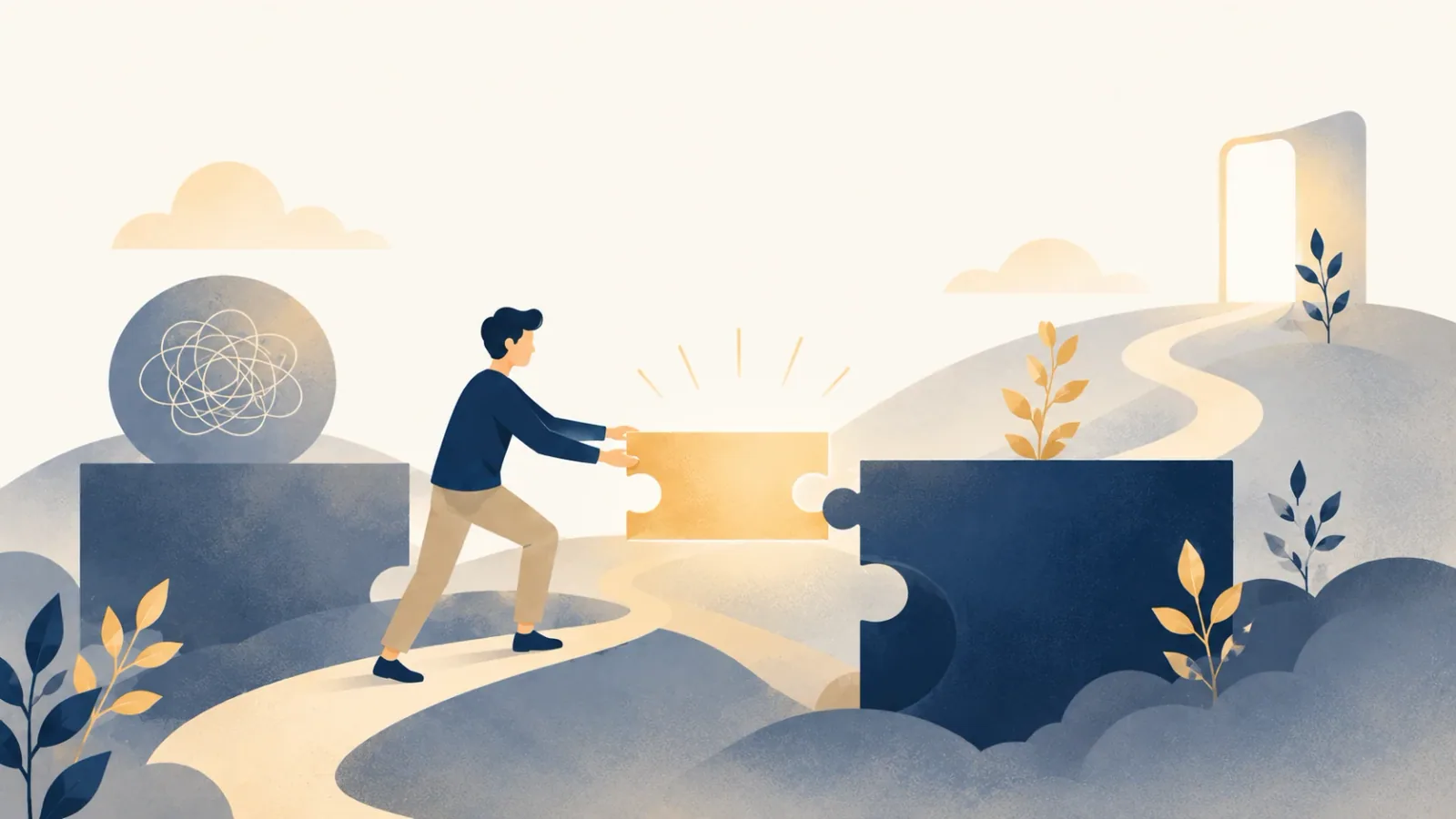
Diskarte does not have to mean doing everything alone or using only free content. It means making practical choices with the resources and constraints in front of you. Structure can give that ingenuity a direction.
The conclusion
- Notice the question you repeatedly search without applying.
- Select one main curriculum for a fixed 30-day period.
- Use outside resources only to solve a named blockage.
- End every week with an artefact, test or explanation you can keep.
1. Identify the search loop
Review your recent history and saved links. Which topic appears repeatedly? Perhaps you have watched several introductions to Python, digital marketing or project management. Write the exact point where you stop: setting up the tool, understanding a formula, choosing a project, or fearing that your first output will look weak.
The loop often protects you from uncertainty. A new tutorial feels clean; a project contains errors and exposes what you do not yet know. Recognising this is not a reason for shame. It tells you that the next useful action is probably practice, not another general introduction.
Create a search rule. Before opening a new resource, write one question and the test that will show whether the answer works. Stop searching when you can perform the next step. This prevents ten helpful explanations from becoming another delay.
Imagine closing the browser with one messy but functioning result. It may feel less impressive than a polished lesson, yet it belongs to you and can improve tomorrow.
2. Choose one curriculum as your backbone
A curriculum gives order to prerequisites. Compare two or three credible routes on sequence, provider, projects, language, schedule, current cost and support. Then choose one as the backbone for 30 days. This is a temporary commitment, not a lifetime declaration.
Free or public options may be the right backbone. TESDA’s official online programmes can provide accessible technical-vocational learning, while local schools, employers and communities may offer instruction or practice. Coursera can be considered when its global provider content, flexible sequence or projects fit the goal. These routes are not automatically equivalent, and Coursera certificates should not be described as TESDA National Certificates.
Use other resources as side tools only. If the backbone lesson on spreadsheets is unclear, find one explanation for that concept, test it, then return. Do not rebuild the entire path every time you meet difficulty.
At day 30, review evidence: what can you now do, explain and build? Continue, adjust or change the backbone based on that evidence rather than the feeling that another course looks newer.
3. Create weekly evidence that can be reused
Choose a weekly output small enough to finish: a cleaned dataset, one responsive page, a customer-question map, a project brief or a short recorded explanation. Keep versions so progress remains visible. Add three notes: what you tried, what failed and what you will test next.
Connect the artefact to a Philippine context you understand without exposing private information. You might analyse an open dataset, design a mock inventory workflow for a sari-sari store, or prepare a content plan for a fictional local service. Avoid turning familiar communities into stereotypes; the point is to use a realistic problem whose details you can explain.
Share the work with one informed person. Ask a focused question such as “Is this measure answering the business question?” instead of “Is this good?” Feedback becomes part of the curriculum and reduces random searching.
After four weeks, you should have four pieces or four versions of one project. That trail shows how your diskarte moved from finding information to creating value.
Summary: structure multiplies resourcefulness
The search-loop diagnosis shows where effort escapes. One curriculum holds the sequence steady. Weekly evidence turns knowledge into reusable work. Together, these steps do not replace diskarte; they allow it to compound.
When you next feel the urge to start another introduction, open the current project first. Let the project tell you the question worth searching.
To move closer to the person you want to become
- Name the topic and exact step where your search loop repeats.
- Choose one backbone curriculum for the next 30 days.
- Write a one-question rule for outside resources.
- Define four weekly outputs or versions.
- Ask one practitioner a focused question about the first output.
 You want to change your life, but every option feels urgent
 Learn AI for a real task, not a remote-work promise
 When a Lesson Leaves You Saying ‘I Still Don’t Get It’: Find the Exact Gap