
Will Turning Your Hobby Into Work Make You Stop Loving It?
Before you monetise something you love, separate the activity itself from the deadlines, customer requests, revisions, and evaluation that may come with selling it.
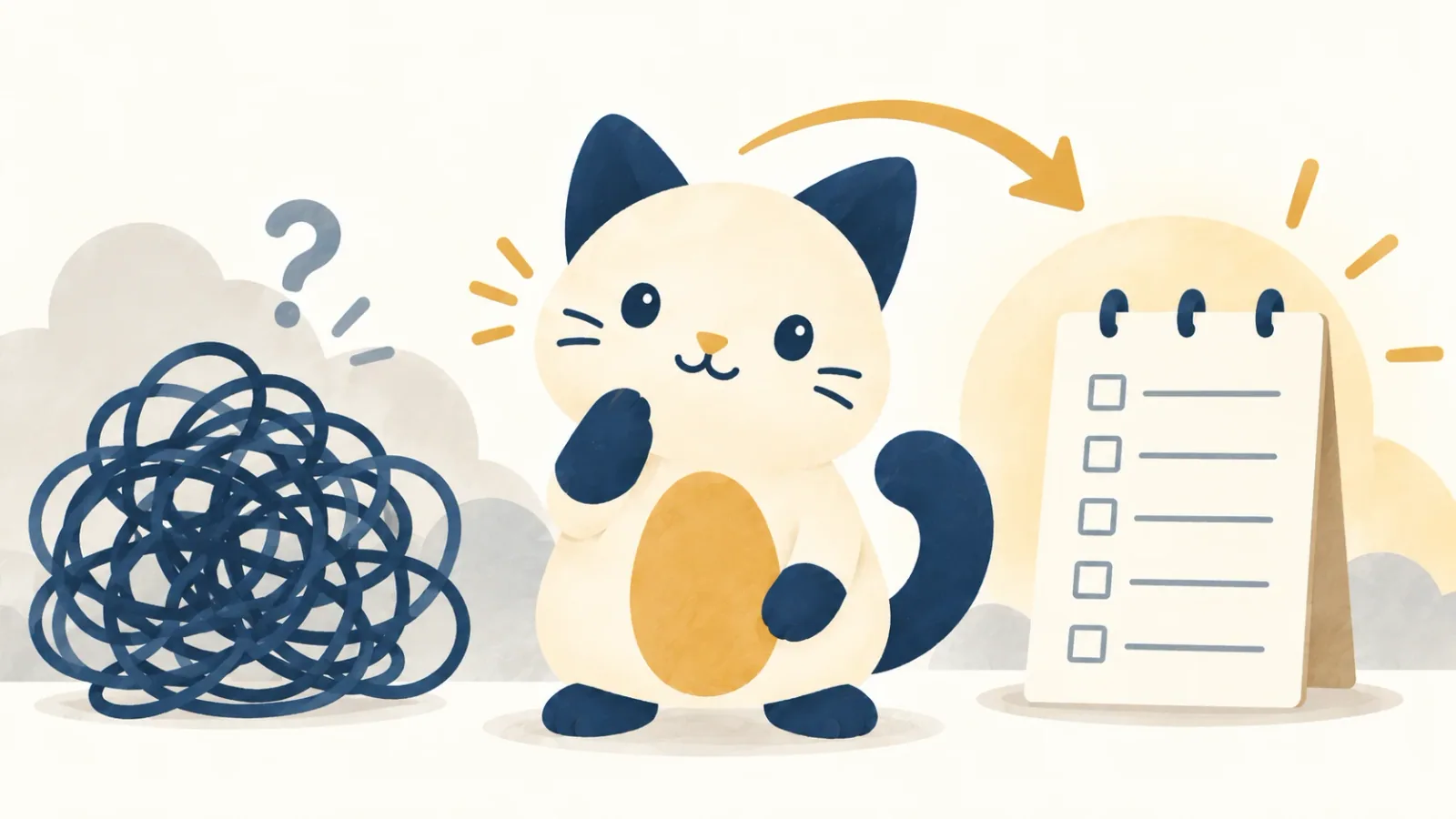
This article is for you if
Someone who enjoys a hobby, has been encouraged to monetise it, and feels uneasy about what paid work might change.
By the end, you will be able to
Separate enjoyment of the craft from the obligations around selling it, then decide whether to keep it private, test paid work, or change the form of monetisation.
“You should sell this” sounds better before someone actually asks to buy it
Imagine you enjoy drawing.
You post a portrait you made on a quiet Sunday evening. A few people compliment it. Someone says, “Seriously, you should take commissions.”
That feels good.
Then a message arrives:
“Could you draw my partner before next Friday? How much would you charge?”
Suddenly, the same activity feels different.
Now there is a deadline. Someone else chooses the subject. You need to name a price. They may ask for changes. You may have to draw on Wednesday night even if you would rather do something else.
You still like drawing. So why does the idea of getting paid feel heavier?
Because the real choice is not simply:
“Do I want money for something I love?”
It is:
“Do I want the work that comes with selling something I love?”
That is a much more useful question.
The hobby and the job around it are not the same thing
When an activity is yours, you usually control more than the activity itself.
You decide when to start.
You decide what to make.
You can abandon an idea halfway through.
You can spend three hours experimenting with something nobody else will ever see.
Once money enters the picture, some of that may change.
| What you enjoy now | What paid work may add |
|---|---|
| Choosing what to make | Working from a request or brief |
| Starting when you feel like it | Working towards an agreed deadline |
| Changing direction halfway through | Delivering what was promised |
| Deciding when something is finished | Handling revisions |
| Sharing only what you want to share | Having your work evaluated |
| Focusing on the craft | Pricing, messages, scheduling, and administration |
None of those additions is automatically bad.
You may enjoy a clear deadline. A customer request may give you an interesting problem to solve. Feedback may help you improve.
But being good at the activity does not tell you whether you will enjoy those additions.
That is the first distinction worth making.
Talent tells you that you may be able to sell the work. It does not tell you whether you want the life around selling it.
Money is not automatically what ruins a hobby
There is a psychological idea behind part of this concern.
Researchers use intrinsic motivation for doing something because the activity itself is interesting or enjoyable. Motivation can also be extrinsic, meaning it is tied to an outcome outside the activity itself, such as payment or another reward. Ryan and Deci describe these forms of motivation in more detail, including differences within extrinsic motivation rather than treating it as one simple category. Ryan & Deci, 2000
Research on rewards also gives a more careful picture than the popular claim that “getting paid kills passion.”
A 1999 meta-analysis of 128 studies found that several forms of expected tangible reward were associated with lower measures of intrinsic motivation after the reward was removed. The same analysis found different effects for other forms of feedback, including positive verbal feedback. Deci, Koestner & Ryan, 1999
That finding does not show that turning a hobby into a business will make you dislike it. The studies examined reward and motivation under specific experimental conditions; they were not a direct test of people turning personal hobbies into businesses.
A later meta-analysis focused on performance rather than hobby enjoyment. It found that intrinsic motivation and external incentives could both predict performance, with their relative importance varying by the kind of performance and how incentives were tied to it. Cerasoli, Nicklin & Ford, 2014
So the useful lesson is narrower:
Do not assume that money itself is the problem. Look at what accepting money changes.
For you, the valuable part of photography might be wandering without a plan and photographing whatever catches your attention. Wedding photography would change much more than your bank balance.
For someone else, having a client, a clear purpose, and a deadline might make photography more satisfying.
The same activity can become very different kinds of work.
Test the job, not just the hobby
Suppose you love making digital illustrations.
The vague question—
“Should I become a professional illustrator?”
—is so large that it is difficult to answer.
Try making the paid version concrete instead:
“I would accept a request for a specific illustration, agree on the price and scope, finish it by Friday, respond to the customer, make one requested revision, and deliver the final file.”
Now look at that sentence carefully.
Maybe the drawing still appeals to you, but the custom request does not.
That does not necessarily mean, “I should never make money from art.”
It may mean:
“I do not want to make art to order.”
That is a different conclusion.
You might prefer making whatever you want and occasionally selling finished pieces.
Or perhaps the deadline is fine, but negotiating prices drains you. You might decide that monetisation is only attractive if that part becomes simple enough.
Or perhaps you try the full process once and discover that you enjoy it more than expected. Solving a problem for another person gives the activity a new kind of meaning.
The useful test is therefore not:
Would somebody pay for this?
It is:
Which parts of the paid version am I actually willing to repeat?
Consider the whole sequence:
create → communicate → deliver → receive feedback → possibly revise → get paid
If you only want the first part, that matters.
If you enjoy all six, that matters too.
Keeping it as a hobby is also a real choice
There is another possibility that often disappears when people talk about “using your talent.”
You can simply keep the activity as yours.
Imagine that your job already gives you deadlines, messages, targets, and other people’s expectations.
On Saturday morning, you make bread because nobody is waiting for it. You can try a strange recipe, fail completely, and laugh at the result. Nothing needs to be efficient. Nothing needs to satisfy a customer.
If that freedom is the main reason the hobby matters to you, protecting it from commercial demands may be valuable in itself.
That does not mean monetisation is wrong.
It means income is only one possible value an activity can produce.
A hobby can also give you curiosity, rest, challenge, expression, connection, or a part of the week that does not need to prove anything.
You do not have to turn every ability into a service.
Decide what you are willing to sell
So when somebody says, “You should monetise this,” there is no need to decide whether your hobby must become a career.
Make the question smaller.
Instead of asking:
“Do I love this enough to make it my job?”
try:
“What would getting paid require me to do, and which of those things do I actually want?”
Perhaps your answer is:
“I love drawing, but I do not want commissions. I might sell work I choose to make.”
Or:
“I enjoy baking, but I do not want weekend orders. I want to keep it for myself.”
Or:
“I like the craft, and I’m curious about the customer side too. I’ll try one small paid project before making a bigger decision.”
Those answers are more useful than either “follow your passion” or “never monetise what you love.”
You are not deciding whether your hobby is valuable enough to become work.
You are deciding which parts of it, if any, you are willing to turn into work.
That lets you explore earning from something you love without pretending that the hobby and the job are the same thing—and without treating a hobby kept purely for yourself as a missed opportunity.
 When You Know What Everyone Else Wants—but Not What You Want
 Do You Really Have Nothing You Want to Do—or Are You Rejecting Interests Too Early?
 Is the Job Wrong for You—or Just the Environment?