
Back at Work, and a Familiar Task Suddenly Feels Unfamiliar: What Should You Relearn First?
Before you decide that your old skills have disappeared, look closely at what is actually unfamiliar in the task in front of you.

This article is for you if
You have returned after time away and still recognise the work, but familiar tasks no longer flow the way they once did.
By the end, you will be able to
You can identify what is genuinely rusty, what has simply changed around the work and what you only need to learn about the current workplace, then choose a focused next refresh.
Have you ever opened a task you used to know and felt your hand stop?
You open something you have done many times before.
Maybe it is a weekly report. Maybe it is a system check, a customer record, a request form or a handoff to another team.
The task is not new. That is what makes the moment strange.
The name is familiar. The purpose is familiar. Even part of the screen looks familiar.
Your hand moves towards the place where the next button used to be.
It is not there.
You look again.
There is a new menu. One step seems to have disappeared. A field has a name you do not remember. The person who used to approve the work is no longer on the thread.
Then a thought arrives very quickly:
I used to know how to do this.
A completely new task can be kinder to the pride. When something is new, you are allowed to look things up. You are allowed to ask basic questions. Nobody expects your hands to know where to go.
An almost-familiar task is different.
It gives you two versions of the same moment at once. There is the task on the screen now, and there is the memory of yourself moving through an older version without stopping.
That comparison can make a small hesitation feel like a large loss.
This is the part I find most misleading about the moment. The pause can feel like a measurement of your ability when it may actually be a measurement of the distance between your old map and the current workplace.
Suppose you still know why the task exists. You know what a correct result should achieve. You can still spot something that looks wrong. You remember the kind of information that matters.
But the route between the start and the finish has changed.
The old spreadsheet is now a web tool. A check that used to be manual now happens automatically. The approval step has moved. The team uses a different name for something you already understand.
From inside the hesitation, all of that can collapse into one sentence:
I cannot do this anymore.
But there is a difference between forgetting the work and finding that the furniture has been moved.
That difference changes the meaning of the pause.
You notice that the button moved because some part of you remembers where it was. You notice that the process feels wrong because you still carry a shape of the old process. You notice that a handoff is different because you remember who used to receive it.
So hesitation is not always an empty space where knowledge used to be.
Sometimes it is evidence that memory is still working.
It is comparing two versions of the same task and reporting a mismatch.
I like that interpretation because it makes the moment less personal without pretending that nothing has been lost. A skill can become rusty. A detail can fade. You may genuinely need practice again.
But rust no longer has to explain everything at once.
There is another reason the task can feel harder than it is.
When we do not know an answer at work, it is easy to assume that the answer was supposed to be inside our head already.
Look again at the same task.
You understand the goal. You can use most of the screen. But you do not know who approves this type of request now.
That may not be forgotten skill.
Perhaps you do not know whether this team still follows the old exception rule. Perhaps a manager wants one extra check before the handoff. Perhaps the company changed the order of two steps while you were away.
You cannot recover a new workplace decision by searching an old memory harder.
That sounds obvious when written down. It rarely feels obvious while the task is open in front of you.
The screen does not label each difficulty.
It does not say, “This part is rusty.”
It does not say, “This part changed while you were away.”
It certainly does not say, “This part is new local knowledge, so please stop accusing your memory.”
That last message would be a useful feature.
Instead, several kinds of unfamiliarity arrive with the same physical result: you stop.
That is how one awkward moment can quietly turn into a much larger project. You think you need to relearn the job. You start reviewing the whole subject. You look at courses, old notes or long lists of skills before you have found the exact thing that blocked the task.
The strange part is that this can feel responsible. Relearning everything sounds thorough.
But thorough is not always accurate.
If the real problem is one changed approval step, revising the whole subject does not make you more prepared for that step. If the tool changed, rereading old theory may leave the new screen just as unfamiliar. If one core skill really has faded, learning the team’s current process will not restore that skill either.
The useful shift is to stop treating every kind of change as one personal gap.
Near the point where you would otherwise begin a broad refresh, keep the real task open for one more minute.
Find the exact place where you stopped and ask: Did I forget the logic of the work, did something in the tool or process change, or is this information specific to the workplace I am in now?
Then refresh only what answers that interruption.
If the logic is rusty, practise that piece. If the route changed, learn the new route. If the missing answer belongs to the current workplace, get the current answer.
Then return to the task and see what happens next.
You do not need to prove, before doing any real work, that the old version of you still exists in full.
You only need to make the next piece of work understandable again.
There is something almost funny about how much meaning one moved button can collect when it sits beside the sentence, I used to be good at this.
Sometimes the button really did just move.
And if the skill itself has faded a little, the task has still given you something better than a vague fear.
It has shown you the exact place to begin again.
Move closer to the person you want to become
Let’s give one real task more authority than a broad judgement about our ability.
When the work stops feeling familiar, we can stay with the exact point of hesitation long enough to see what kind of change is actually there.
The aim is not to return as though you were never away. It is to recognise what still holds, learn what changed around it, and refresh only the piece that lets the next real task move again.
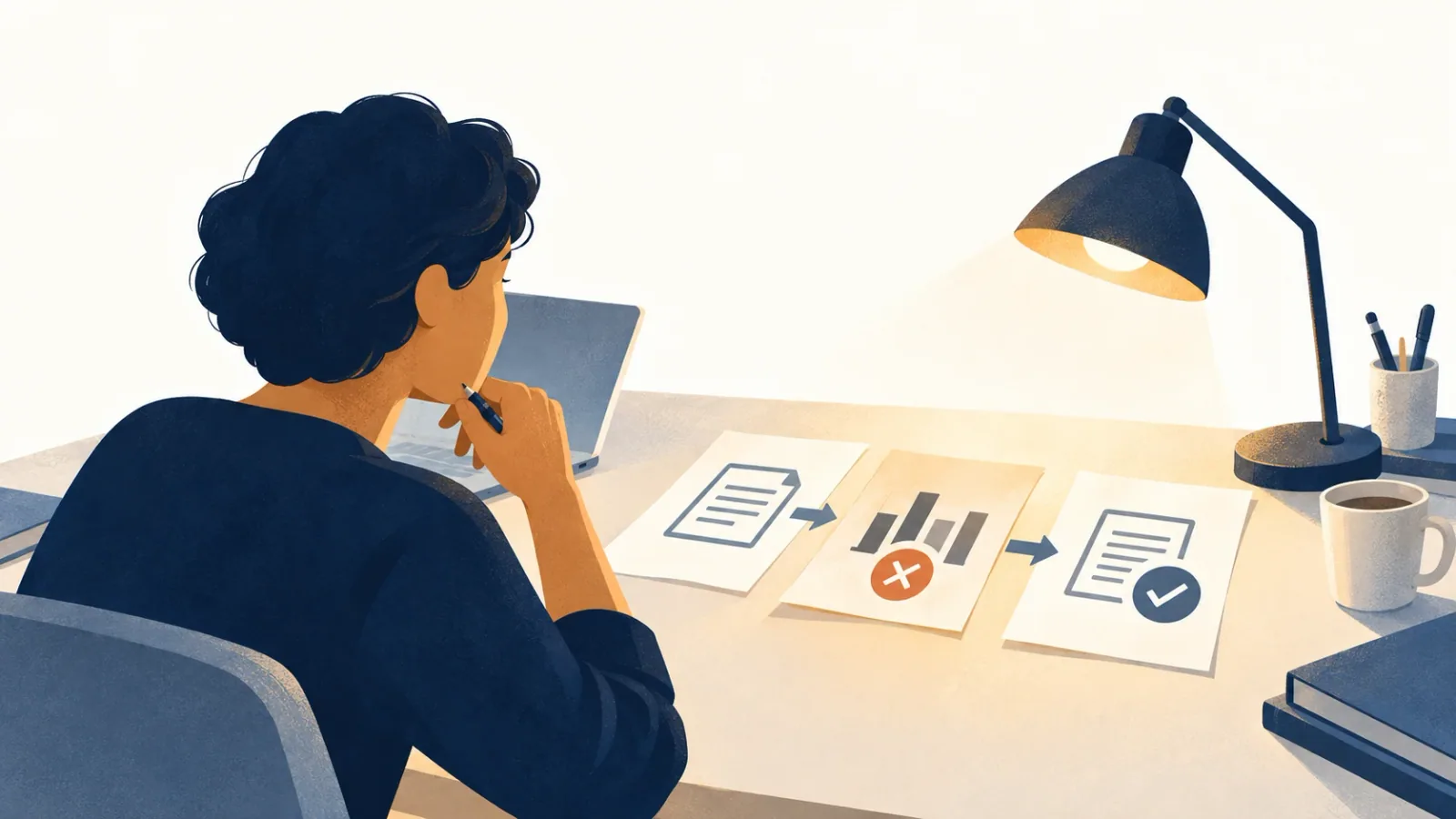 Made a Mistake at Work? Pinpoint the Skill Gap Before You Start Learning
 How to Reconnect With a Former Colleague Without Making It Sound Like a Job Request
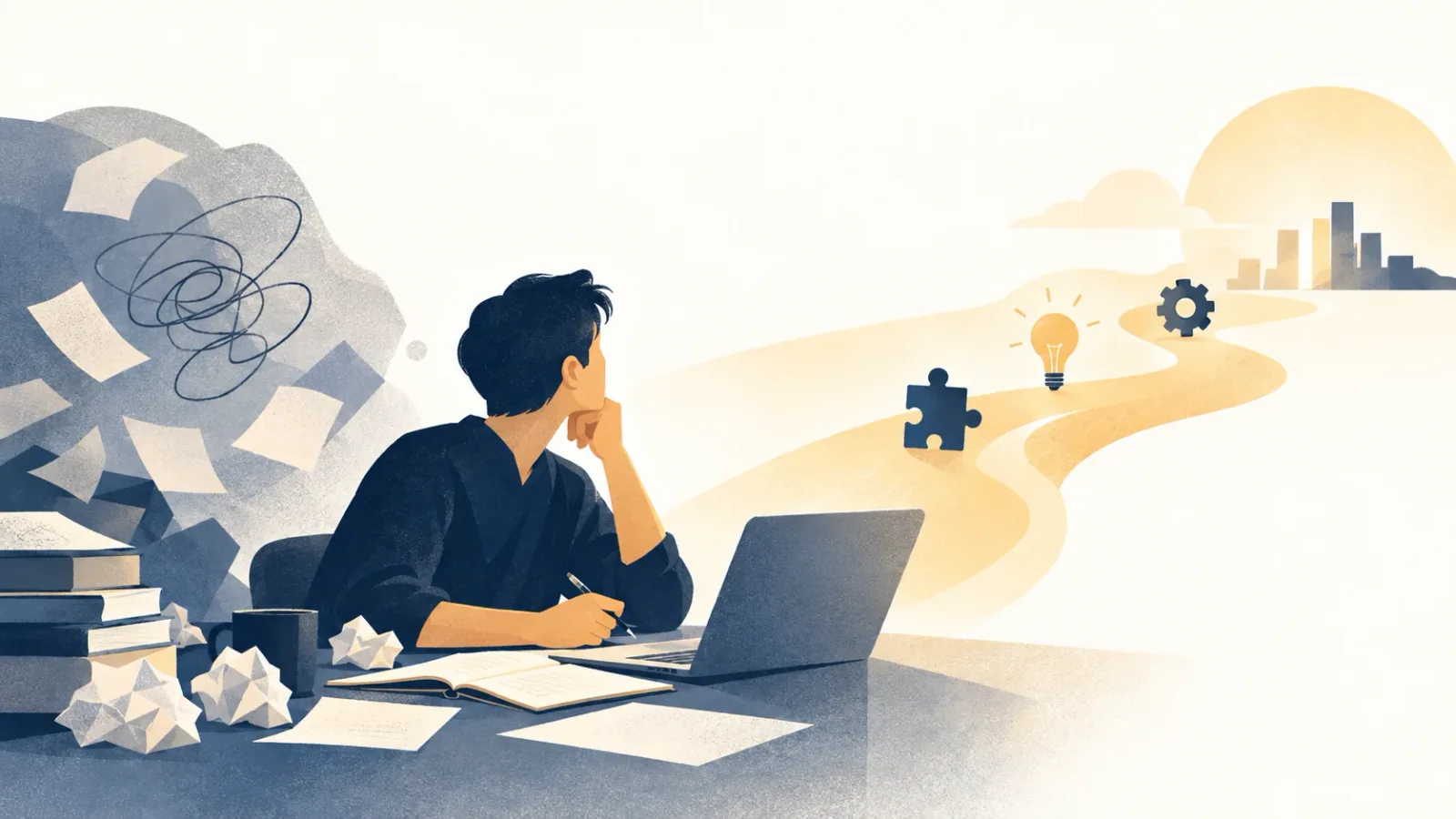 Corrected in Front of Colleagues? How to Return to Work After the Moment